The 5 Biggest Mistakes Parents Make After Basic 8
QUICK NAVIGATION
📖 In this guide
Your child finished Basic 8 — now what? An Olympic coach reveals the 5 mistakes that derail skating careers, and how to avoid each one.
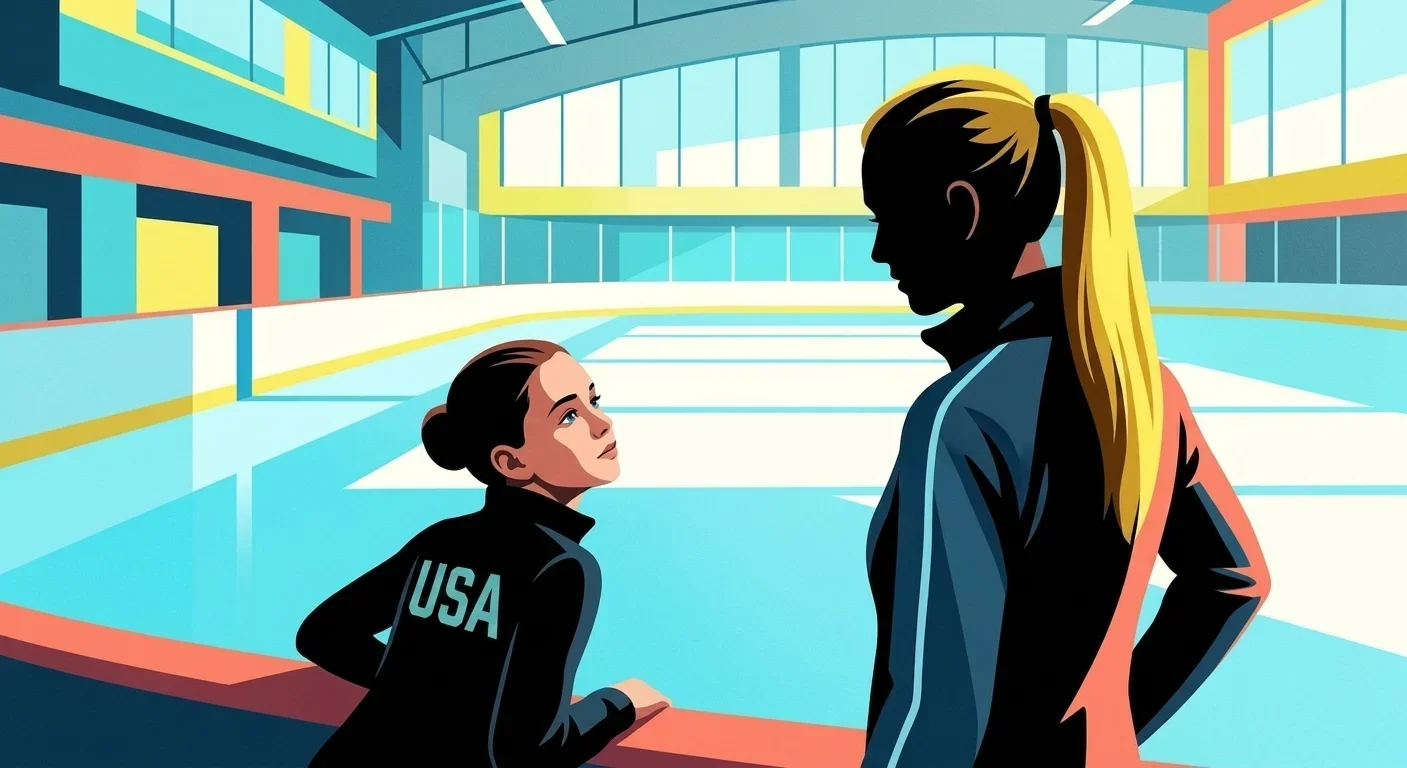
The day your child passes Basic 8 should be a celebration. They've finished the curriculum, they can skate independently, and they're ready for what comes next.
What comes next is where most families quietly lose the next two years.
I've coached hundreds of skaters who came to Krigor Studio after Basic 8 — some thriving, many burned out, a few permanently soured on a sport they used to love. And in almost every "burned out" case, the same handful of decisions in the months right after Basic 8 is what did the damage. Not the child's talent. Not the family's investment. The decisions.
Here are the five I see most often, and what to do instead.
Mistake #1: Treating "What's next?" like an administrative question
Basic 8 ends. Your skating director hands you a list of next-step options — Aspire Academy, freestyle sessions, private lessons, a competitive track program. You look at schedules, you look at prices, you pick what fits your week.
That's the mistake. You just made a strategic decision as if it were a logistics decision.
What comes after Basic 8 isn't "the next class." It's the beginning of specialization, and specialization shapes the next ten years of your child's skating life. Singles or Ice Dance. Recreational or competitive. Local-rink culture or commute-to-elite-coach culture. These choices compound. A child who spends a year in the wrong specialization track loses ground that's hard to recover, not because of skill — because of identity. They begin to think of themselves as the kind of skater their environment shapes them into.
What to do instead: Before you sign up for anything, schedule a 30-minute consultation with two or three coaches outside your home rink. Ask each one: Based on what you've seen of my child, what discipline and what training intensity would you recommend, and why? You'll get three different answers. The disagreement itself is the information you need. The right path becomes obvious when you triangulate it.
Mistake #2: Staying with the Learn-to-Skate coach out of loyalty
Your Learn-to-Skate coach was wonderful. They taught your kid to glide, to fall safely, to love the ice. Your child adores them. And so when Basic 8 ends, you stay.
I want to say this carefully, because Learn-to-Skate coaches are some of the most underappreciated people in this sport. But here's the truth: the skill set that takes a child from "never skated" to "passed Basic 8" is fundamentally different from the skill set that takes them from Basic 8 to a competitive level.
The first requires patience, gentleness, group management, and a deep understanding of how to make a nervous five-year-old feel safe. The second requires technical specificity, biomechanical knowledge, competition strategy, and often international training experience. Some coaches have both. Most don't, and they're not supposed to. Asking a Learn-to-Skate specialist to develop a competitive single skater is like asking a kindergarten teacher to coach for the SAT.
What to do instead: Have an honest conversation. Tell your Learn-to-Skate coach that you're exploring next steps, and ask them — directly — who in the area they would recommend for the next phase. Good coaches will tell you. Great coaches will already have a name ready. The ones who try to keep your child past their expertise are the ones to walk away from gently.
Mistake #3: Cramming ice time before the body is ready
I see this every fall. A child finishes Basic 8 in June, the family is excited, and by September they're on the ice five days a week with daily off-ice conditioning, ballet on Wednesdays, and a Sunday master class. Six months earlier the child was skating twice a week.
This is the fastest way I know to produce two specific outcomes: stress fractures in the lower back by age 11, and burnout by age 12.
A young body adapts to training load on a curve. Bone density, ligament strength, neuromuscular coordination — these grow at biological rates that don't care how motivated you are. Increase ice time too aggressively and the body breaks down before the skill develops. Even worse, the child starts associating skating with exhaustion instead of joy.
What to do instead: The general rule I give parents — and your coach should give you a more specific number — is no more than a 25% increase in weekly training load per quarter. Went from 4 hours a week to 5? Hold there for ten weeks before going to 6. This sounds painfully slow when you're excited. It's the difference between a 14-year-old who's still in love with the sport and one who quit at 12.
Same goes for adding off-ice. Ballet, conditioning, dance — these are valuable, but each one is a load on the body. Add one new off-ice activity per quarter, not three at once.
Mistake #4: Investing in equipment before investing in coaching
Your child is excited. You want to show them you take this seriously. So you buy them their first "real" pair of figure skates — proper boots, proper blades, $600 or more — and matching practice apparel.
Then you sign them up for one private lesson per week with whoever's available, and free skate sessions on Saturdays.
I've watched this play out hundreds of times. Six months later, the boots are mostly broken in, the kid has plateaued, and the parent is wondering whether their child has hit some kind of natural ceiling.
The ceiling isn't the child. It's the coaching ratio. In figure skating, coaching is the multiplier — equipment is the floor. A child with rental skates and three weekly hours of focused, expert coaching will outpace a child with $1,000 boots and one weekly lesson with an inexperienced coach. Every time.
What to do instead: For the first six to twelve months after Basic 8, prioritize coach quality and frequency over equipment upgrades. Yes, your child needs proper boots eventually — usually within the first year of serious training. But invest in the coach first. Find someone who can give your child two structured sessions per week with technical feedback, even if it means buying entry-level boots that you'll replace in eighteen months. The skills built in those eighteen months are what determine the trajectory.
Mistake #5: Letting the child choose without context
This one is the most painful, because it usually comes from a good place.
Modern parenting wisdom says: let children choose what they're passionate about. Don't force them. Let them lead. So when the singles coach is offering a tryout and the ice dance coach is offering a tryout, the parent asks the seven-year-old: "Which one do you want to do?"
The seven-year-old picks the one their best friend is doing. Or the one whose music sounds cooler. Or the one whose coach handed out lollipops at the demo class.
This isn't a child failing. It's a child being a child. Children at this age don't yet have the perspective to make a choice that will shape the next decade of their athletic life, and asking them to do so isn't respect — it's outsourcing a hard decision to someone who hasn't lived long enough to make it.
The role of a parent at this stage isn't to dictate, and it isn't to let the child decide unaided. It's to narrow the options to two or three good ones and then guide the choice. "I've watched you skate for two years now. I think you'd be amazing at either Singles or Ice Dance. Let's try a few sessions of each and see which one makes you light up. I'll help you notice what feels right." That's parenting. The other version is abdication.
What to do instead: Let your child have meaningful input on a constrained set of choices you've curated with your coach's help. Their voice matters — they're the one doing the work. But the menu is yours to design.
Frequently asked questions
-
In figure skating, coaching is the multiplier — equipment is the floor. A child with rental skates and three weekly hours of focused, expert coaching will outpace a child with $1,000 boots and one weekly lesson with an inexperienced coach, every time.
-
For the first six to twelve months after Basic 8, prioritize coach quality and frequency over equipment upgrades. Invest in the coach first — find someone who can give your child two structured sessions per week with technical feedback, even if it means buying entry-level boots you'll replace in eighteen months.
-
No. Children at this age don't yet have the perspective to make a choice that will shape the next decade of their athletic life. The parent's role is to narrow the options to two or three good ones and then guide the choice, letting the child have meaningful input on a constrained set of choices curated with the coach's help.
-
Every family who avoided these five mistakes shares one common trait: they treated the post-Basic-8 transition with the seriousness it deserves — not panicked seriousness, but calm, thoughtful, informed seriousness. They asked questions, got second opinions, and built a long-term plan they adjusted as the child grew.
A final thought
Every family I've worked with at Krigor Studio who avoided these five mistakes shares one common trait: they treated the post-Basic-8 transition with the seriousness it deserves. Not panicked seriousness — calm, thoughtful, informed seriousness. They asked questions. They got second opinions. They built a long-term plan and adjusted it as the child grew.
The families who treated it casually — who picked the convenient class, kept the comfortable coach, ramped up the schedule because the kid seemed eager, bought the expensive skates — those are the ones who quietly stepped away from the sport eighteen months later, often without ever quite understanding why.
Your child's love of skating is fragile in the year after Basic 8. Protect it deliberately. The right next steps don't make figure skating harder for your family — they make every subsequent year easier.
If you're at this crossroads right now and want a second opinion from coaches who've trained skaters from first steps to international competition, we offer no-pressure consultations at Krigor Studio. Whether your child eventually trains with us or somewhere else, we'll give you an honest assessment of where they are and what we'd recommend next.
That's the conversation that should happen before any check is written.
Igor Lukanin is a 2-time Olympian and co-founder of Krigor Studio in Montclair, NJ. He has coached skaters from Learn-to-Skate through international competition, including national medalists in both Singles and Ice Dance disciplines.
Related reading: